Blog
Automation
The Marketing Agency Reporting Problem Nobody Talks About
Marketing agencies are losing thousands of hours a year to manual client reporting. Here's why it's happening, what it's actually costing you, and how the smartest small agencies are fixing it without hiring anyone new.

CampaignPilots
Marketing Intelligence
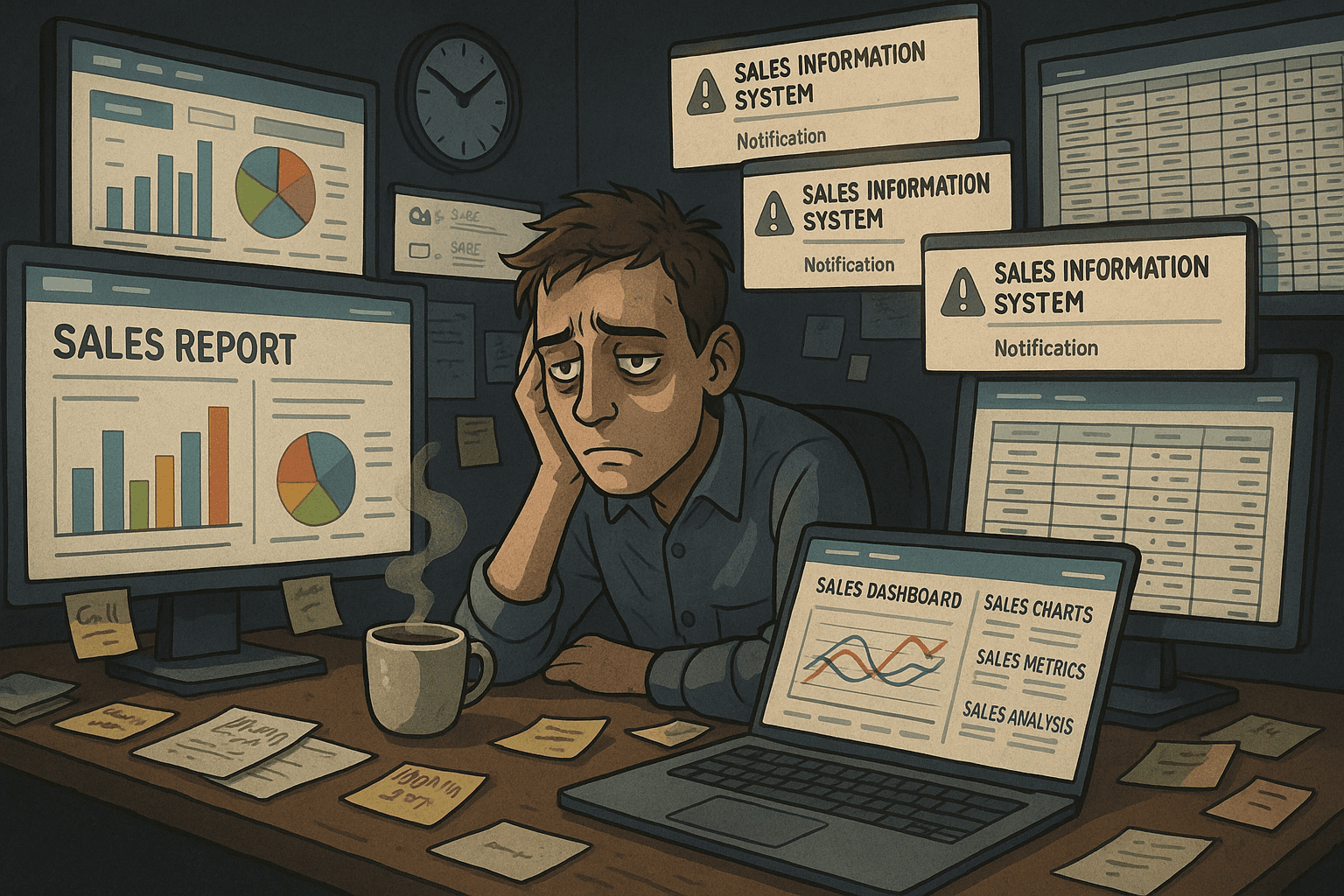
The report that takes 8 hours and gets a 10-second glance
It starts on a Tuesday. You open Google Analytics, pull the monthly traffic numbers, cross-reference Search Console for the organic data, jump into Google Ads for spend and conversions, copy everything into a spreadsheet, format it so it doesn't look like a spreadsheet, write a paragraph of commentary explaining what happened and why, drop it into a slide deck or a PDF, add the client's logo, and send it off.
Eight hours. Sometimes more.
The client opens it on a Thursday. They scroll to the traffic number, check if it went up or down, and close it. Maybe they reply with "looks good, thanks." Maybe they don't reply at all.
This happens every single month, across every client on your roster. And almost nobody in the agency world talks about it honestly -- because admitting that your most time-consuming deliverable gets a 10-second glance feels like admitting something is broken. Something is broken.
Why manual reporting is quietly killing your margins
Run the math for a minute. If one account manager spends 8 hours per client per month on reporting, and you have 10 clients, that's 80 hours a month going to a single task. Two full work weeks. Every month.
At $50 an hour in fully loaded labor cost, that's $4,000 a month -- $48,000 a year spent assembling reports. That number never shows up as a line item in your P&L. It hides inside your payroll. But it's there, every month, compounding quietly.
And that's before you factor in what those hours aren't being used for. Every hour spent pulling numbers from GA4 is an hour not spent on strategy, not spent on creative, not spent on the work that actually grows client accounts and justifies your retainer. Reporting isn't just expensive in the time it takes -- it's expensive in the opportunity it displaces.
The agencies that figure this out first are the ones that scale without the proportional headcount increase everyone else assumes is inevitable.
The data is already there -- the problem is the assembly
Here's the part worth understanding clearly: this is not a data problem.
The data exists. Google Analytics is tracking every session, every traffic source, every conversion. Google Search Console is logging every click and impression from organic search. Google Ads is recording every dollar spent and every action taken. Every client you have is sitting on a complete picture of their marketing performance right now.
The problem is assembly. Someone has to go into each platform, pull the right numbers, put them in the same place, make sense of what they're saying together, and translate that into something a client can understand. That process -- the going-and-getting, the combining, the interpreting -- is where the hours disappear.
And it's the part that doesn't require a human. Not anymore.
The strategic layer -- deciding what to do about what the data is saying, having the client conversation, understanding the business context behind the numbers -- that absolutely requires a human. But the assembly? That's a solved problem if you're using the right tools.
What good automated marketing reports actually look like
There's a version of automated reporting that most people have seen and it's not impressive. A scheduled PDF that dumps last month's numbers into a template. Traffic up 3%. Clicks down 2%. No context, no interpretation, no explanation of what any of it means or what to do about it.
That's not good automated reporting. That's just a slower version of the manual process.
Good automated marketing reports do a few things differently. They pull live data from every connected source -- Google Analytics, Search Console, Google Ads -- rather than a snapshot from whenever someone last exported a CSV. They detect anomalies: if traffic dropped 30% in a specific channel this week, the report flags it and explains what likely caused it. They cross-reference data sources -- connecting a drop in Search Console impressions to a drop in organic sessions, for example, rather than reporting each in isolation. And they translate findings into plain English that a client can actually understand without needing a marketing degree.
The goal isn't a prettier version of the same report. It's a report that tells the client something useful, delivered without anyone on your team having to build it from scratch every month.
How agencies are cutting reporting time without cutting quality
The shift looks like this: instead of an account manager spending the first week of every month in spreadsheets, the data does the work automatically.
CampaignPilots connects directly to Google Analytics, Google Search Console, and Google Ads via OAuth -- no CSV exports, no manual data pulling. Once connected, you can either ask questions about client data in plain English, or set up AI Pilots: autonomous agents that run on a daily, weekly, or monthly schedule, pull live data from every connected source, detect what's changed and why, and deliver a plain-English report directly to your inbox.
The account manager stops being a data assembly line. They get the report the same time the client does -- or before it -- and they spend their time on the strategic layer: what do we do about this, and how do we talk to the client about it?
For a 10-client agency, that's potentially 80 hours a month redirected from assembly to strategy. The reporting quality goes up because the data is live and cross-referenced automatically. The client experience goes up because insights are delivered faster and explained more clearly. And the margin goes up because you're not paying for two weeks of work that a well-configured AI can do in minutes.
What to automate first (and what to keep human)
Not everything in the reporting process should be automated, and knowing the difference matters.
Automate the data gathering -- pulling numbers from GA4, Search Console, and Ads should never require a human. Automate the anomaly detection -- if something unusual happened this week, a system should catch it before you do. Automate the trend summaries -- week-over-week and month-over-month comparisons are pure assembly, not analysis. Automate the cross-channel synthesis -- connecting what's happening in paid to what's happening in organic requires pulling from multiple sources simultaneously, which is exactly what software does better than people.
Keep the human touch for the strategic recommendations. A client's business context, their competitive landscape, their risk tolerance, the conversation about what to prioritize next -- none of that lives in a dashboard. Keep it for the relationship. A report delivered automatically is still a report that someone on your team should be ready to talk through. Keep it for anything that requires judgment the data doesn't have.
The agencies winning right now aren't the ones doing more reporting. They're the ones doing smarter reporting -- and spending the time they save on the work that actually moves client results.
CampaignPilots
Marketing Intelligence
Share